
Andre’s Notes
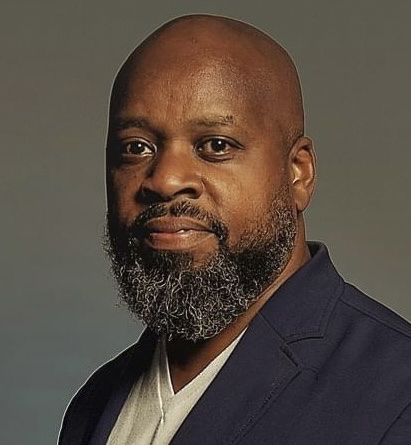
Andre Player is the founder and CEO of Team Player Ventures, a sales and sales management consulting firm based in Seattle, WA. He has spent 35+ years connecting businesses with solutions that move the needle, one honest conversation at a time.
The Win-Win Inquisition, Part 2: What It Actually Looks Like
In Part 1, I told you why I called this the Win-Win Inquisition instead of something safer. Here’s what it looks like in practice, starting with the thing most salespeople get backward: the question.
The Art of Asking the Right Questions
Most salespeople listen to respond, not to understand. They hear a pain point and start loading up the pitch, three slides ahead while the client is still talking. The client feels it every time.
I think of myself less like a presenter and more like a good doctor, one with real bedside manner. My job in that first conversation isn’t to impress you. It’s to diagnose what’s actually going on. Your challenges. Your goals. The problems you’ve quietly learned to work around and haven’t said out loud yet.
That means asking questions that go deeper. Not “what’s your budget?” but “what’s the cost of not solving this?” Not “how’s the project going?” but “what would make you call this a win the next time we talk?”
And then I actually listen to the answers. Not just waiting for my turn to talk, but coming at every conversation wanting to learn something I didn’t know walking in. No canned scripts. No predetermined solutions.
You know your business better than I ever will, the same way a patient knows their own body better than any doctor does. I’m just there to help you see it differently.
And here’s something most salespeople never learn: you have to earn the right to go deeper. Curiosity without credibility is just nosiness. But that’s next month’s conversation.
What Japan Taught Me First, and What I Do Because of It
The first time I did business in Japan, I learned quickly that the culture doesn’t put business first. I watched how much time was spent connecting on a personal level before a single word was said about business. No rushing to the agenda. No skipping to the pitch. The relationship came first, and the business followed. It shaped how I wanted to show up in every room after that, including the ones back home where everyone’s in a hurry to get to the ask. If you’ve ever sat in one of those rooms, you know the feeling.
These days, when a prospect wants to get straight to the numbers, I don’t push back. That can be a real buying signal, and ignoring it would be a mistake. But I read what’s behind the ask. Sometimes they’re ready to move, and I move with them. Other times the number is standing in for a question they haven’t asked yet. Either way, I want the why before we lock in the what.
Once I understand what’s really going on, the solution almost presents itself, and it’s built around your situation, not pulled from a standard package.
I was doing a rough version of this back with those stadium cups: nickel, dime, or quarter depending on the cup, and only after I’d found the neighbor who actually cared about that team. I just didn’t have a name for it yet. Decades later, the instinct is the same. Know who you’re in front of, and price, or pitch, accordingly.
I’ll also tell you which parts I’d steer you away from. Trust doesn’t come from a polished deck. It comes from the moment a client thinks this person actually gets it.
Not Every Conversation Ends in a Deal, and That’s Okay
I measure success in three outcomes, not just closed deals.
Deal Sealed. The fit is real, and we move forward together with trust built in from day one.
The Mutual Nod. We realize together that it’s not the right fit right now. That’s not a failure. That’s integrity in action, and those relationships have a funny way of coming back around.
Seeds of Trust. No deal today, maybe not for a while. But the conversation was real, and that leaves a mark.
Satisfied clients become advocates. They send others your way, reputation compounds, and over time you stop chasing business. It starts finding you.
What Gets You the Callback
A client walks out of a meeting with you. They’re not thinking about your features or your pricing. They’re thinking about how the conversation felt. Whether they were heard. Whether they trust you. That is what determines whether they call you back. It’s the same thing I saw in Japan.
I’ve built my entire career on this. At IBM. At Microsoft. At Deloitte and Touche. Across the partner ecosystem and beyond. And now, through Team Player Ventures, it’s what I teach and coach every day.
So yes, I call it the Win-Win Inquisition.
Not because I’m interrogating you.
Because I’m relentlessly curious about your business.
There’s a difference. And in that difference, the best relationships I’ve ever built were born.
That’s what the Win-Win Inquisition looks like in practice. Next month, we’ll talk about how to earn the right to ask the deeper questions. If this resonates, stick around.